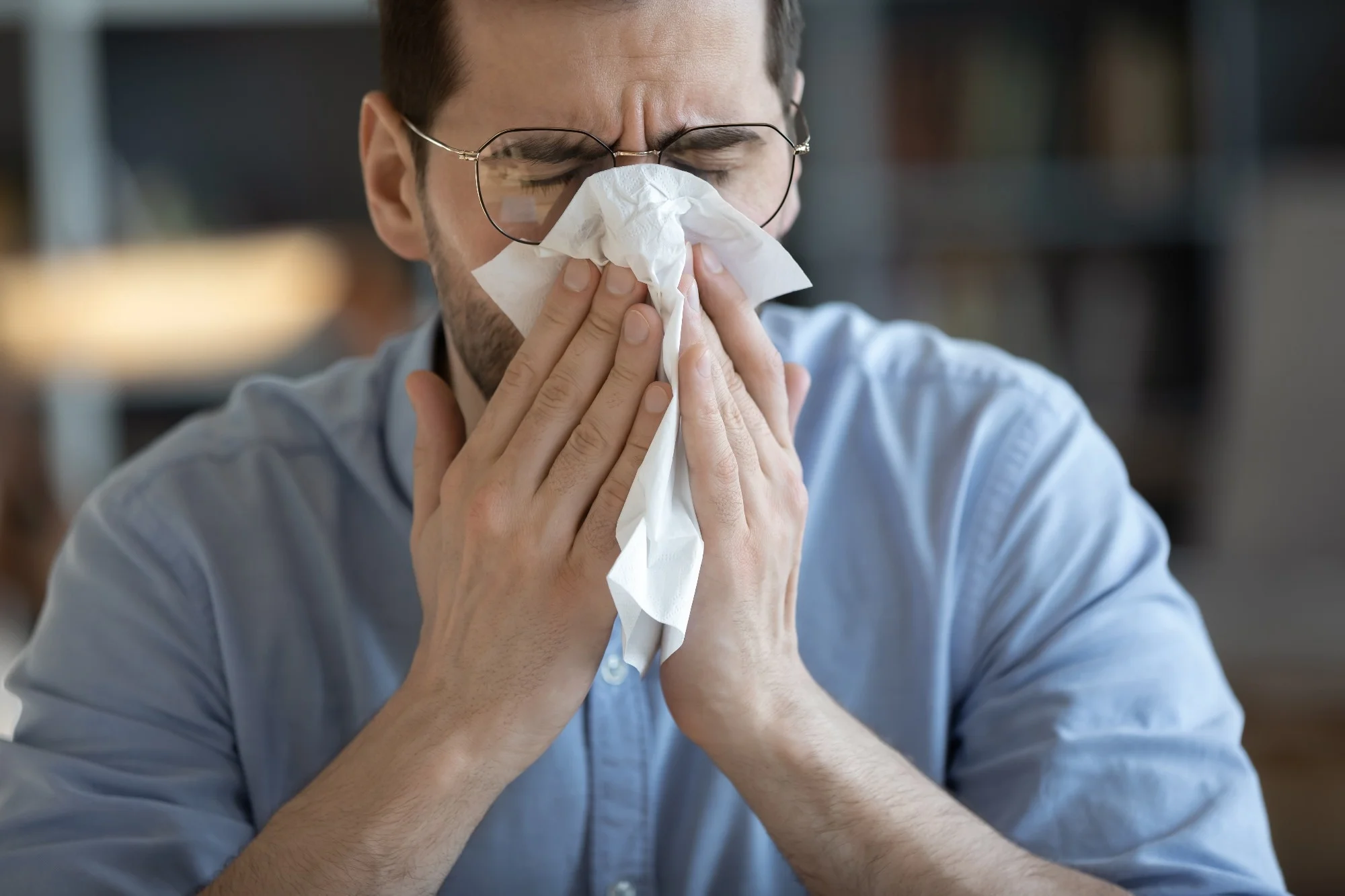
A runny nose, sore throat, or cough might seem like the beginning of an ordinary cold. But when you have asthma, a respiratory infection can affect more than your nose and throat.
Viruses that cause respiratory illnesses can irritate and inflame the airways. For someone whose airways are already sensitive because of asthma, this additional inflammation can lead to increased coughing, wheezing, chest tightness, or difficulty breathing. In some cases, an infection can trigger a significant asthma flare-up.
As respiratory illnesses become more common during the fall and winter months, understanding the connection between viruses and asthma can help you recognize problems early and protect your lungs.
Why Can a Cold Make Asthma Worse?
Asthma is a chronic condition that affects the airways in the lungs. People with asthma have airways that can become inflamed and narrow when exposed to certain triggers.
Respiratory infections are one of those triggers.
When a virus infects the respiratory system, it can cause additional inflammation and mucus production. For someone with asthma, this can make already-sensitive airways more reactive.
That is why an illness that causes relatively mild symptoms in one person may lead to more significant breathing problems in someone with asthma.
Which Respiratory Viruses Can Trigger Asthma Symptoms?
Several respiratory viruses can contribute to asthma flare-ups.
One of the most common is rhinovirus, which is frequently responsible for the common cold. Rhinoviruses circulate throughout the year but often increase during the fall and spring.
Other respiratory illnesses that may worsen asthma include:
- Influenza, or flu
- COVID-19
- Respiratory syncytial virus, or RSV
- Other viruses that infect the respiratory tract
These infections can affect adults and children with asthma.
Having asthma does not mean every respiratory infection will become severe. However, it does mean paying closer attention to changes in your breathing when you become sick.
Why Are People With Asthma More Vulnerable?
Asthma causes chronic inflammation and increased sensitivity in the airways.
When a respiratory infection adds another source of irritation, the airways may swell, produce more mucus, and become narrower. This can make it harder for air to move in and out of the lungs.
The result may be familiar asthma symptoms such as:
- Wheezing
- Persistent coughing
- Chest tightness
- Shortness of breath
- Nighttime coughing
- Difficulty completing normal activities
Some people may also notice that their usual asthma medications seem to be needed more frequently during an illness.
Changes like these should not automatically be dismissed as part of having a cold.
Is It a Cold or an Asthma Flare-Up?
Sometimes it can be difficult to tell where a respiratory infection ends and an asthma flare-up begins.
A respiratory illness may cause symptoms such as:
- Runny or stuffy nose
- Sneezing
- Sore throat
- Coughing
- Fever
- Fatigue
Asthma is more likely to cause symptoms involving the lower airways, including wheezing, chest tightness, shortness of breath, and persistent coughing.
However, the two can happen at the same time.
A cold can begin with nasal congestion and a sore throat, then trigger worsening asthma symptoms as the infection progresses.
Instead of focusing only on whether you have a cold, pay attention to whether your breathing is changing.
Watch for Early Changes in Your Breathing
Asthma flare-ups do not always begin with severe breathing difficulty.
Early changes may be subtle.
You might notice:
- More coughing than usual
- Coughing during the night
- Wheezing that was not present before
- Feeling unusually short of breath
- Difficulty exercising or completing normal activities
- Needing rescue medication more often than usual
Recognizing these changes early gives you an opportunity to follow your asthma action plan and contact your healthcare provider when appropriate.
Your Asthma Action Plan Matters Even More When You’re Sick
An asthma action plan provides clear instructions for managing your asthma when symptoms change.
Your plan may include information about:
- Your regular asthma medications
- How to recognize worsening symptoms
- When to use prescribed rescue medication
- When to contact your healthcare provider
- When emergency care is necessary
If you have not reviewed your asthma action plan recently, respiratory illness season is a good time to discuss it with your asthma specialist.
Parents should also make sure children with asthma have an updated plan that is shared with the appropriate school staff and caregivers.
Don’t Stop Your Asthma Medications Because You Feel Well
Asthma symptoms can come and go, but that does not necessarily mean the underlying airway sensitivity has disappeared.
If you have been prescribed a controller medication, continue using it according to your healthcare provider’s instructions.
Do not stop, reduce, or change your asthma medication simply because you have been feeling better.
Good asthma control before an illness begins may help your lungs handle respiratory triggers more effectively.
If you are unsure whether your medication plan is still appropriate, speak with your healthcare provider.
Simple Ways to Reduce Your Risk of Respiratory Illness
It is impossible to avoid every respiratory virus, but everyday precautions can reduce your exposure.
Helpful habits include:
- Washing your hands regularly
- Avoiding touching your eyes, nose, and mouth with unwashed hands
- Covering coughs and sneezes
- Improving indoor ventilation when possible
- Avoiding close contact with people who are sick when practical
- Staying home when you are sick when possible
Vaccination can also help protect against certain respiratory illnesses. Talk with your healthcare provider about recommended vaccines based on your age, health history, and individual risk factors.
What About Flu and Asthma?
Flu deserves particular attention for people with asthma.
Influenza affects the respiratory tract and can cause additional inflammation in the lungs. People with asthma are at increased risk of serious complications from flu, even when their asthma is generally well controlled.
Flu can also trigger an asthma attack or contribute to complications such as pneumonia.
If you have asthma and develop flu-like symptoms, contact your healthcare provider for guidance, particularly if your breathing symptoms are worsening.
What About RSV and COVID-19?
RSV and COVID-19 can also affect people with asthma.
RSV often causes cold-like symptoms, but it can become more serious for infants, older adults, and people with certain underlying conditions. RSV infection can also worsen existing asthma.
COVID-19 can trigger asthma symptoms as well, and some people with poorly controlled or more severe asthma may have a higher risk of becoming seriously ill.
Your individual risk depends on factors such as age, asthma severity, other medical conditions, and overall health.
When Should You Contact Your Asthma Specialist?
Consider contacting your healthcare provider if you notice that respiratory illnesses regularly cause significant asthma symptoms.
You should also discuss your asthma management if you:
- Frequently need rescue medication
- Wake at night because of asthma symptoms
- Have repeated asthma attacks after colds
- Experience persistent coughing or wheezing after an illness
- Have difficulty participating in normal activities
- Are unsure whether your asthma is well controlled
An asthma specialist can evaluate your symptoms, assess lung function when appropriate, identify additional triggers, and help determine whether your current treatment plan is providing adequate control.
Know When Breathing Problems Are an Emergency
Some asthma attacks require immediate medical attention.
Follow the emergency instructions in your asthma action plan. Severe difficulty breathing, rapidly worsening symptoms, difficulty speaking because of breathlessness, or symptoms that do not respond as expected to prescribed rescue treatment should be treated seriously.
When in doubt about severe breathing difficulty, seek emergency medical care.
The Bottom Line
A cold may be minor for many people, but respiratory infections can create additional challenges when you have asthma.
Viruses such as rhinovirus, influenza, RSV, and COVID-19 can irritate sensitive airways and contribute to coughing, wheezing, chest tightness, and asthma attacks.
The goal is not to worry about every cough or cold. It is to understand your asthma well enough to recognize when your breathing is changing.
Following your treatment plan, reducing your exposure to respiratory illnesses, keeping medications available, and knowing when to contact your healthcare provider can help you stay one step ahead during respiratory illness season.
Don’t wait until a respiratory illness makes breathing harder.
Schedule an appointment with AAI-C to review your asthma action plan, assess your asthma control, and create a personalized strategy to help protect your lungs throughout respiratory illness season.