If you’ve ever dealt with a rash that just won’t go away, one that itches, burns, flakes, or keeps returning in the same spot, you know how frustrating contact dermatitis can be. You change soaps. You switch detergents. You try new creams. And still, it comes back.
The truth is, many skin reactions are caused by allergens you would never suspect. That’s where patch testing becomes a powerful diagnostic tool. It helps uncover the exact substances triggering your skin reaction so you can stop guessing and start healing.
Let’s walk through what patch testing involves and why it can be a game-changer for your skin health.
What Is Contact Dermatitis?
Contact dermatitis is a skin reaction that occurs when your skin comes into contact with a substance that either irritates it or triggers an allergic response. Unlike food allergies or environmental allergies, this reaction happens directly on the skin.
There are two main types:
- Irritant Contact Dermatitis – caused by direct damage from harsh substances (like cleaning products).
- Allergic Contact Dermatitis – caused by your immune system reacting to a specific allergen.
The tricky part? Allergic reactions can show up 24–72 hours after exposure, making it very difficult to identify the cause on your own.
What Is Patch Testing?
Patch testing is a safe and controlled way to identify substances causing allergic contact dermatitis.
During the test:
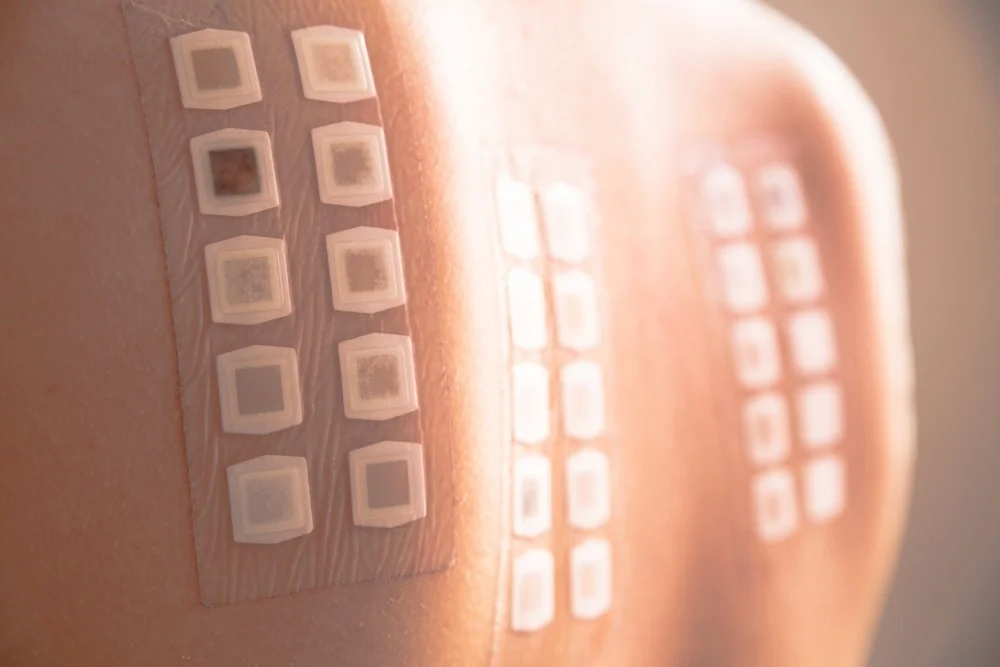
- Small amounts of common allergens are placed on adhesive patches.
- These patches are applied to your back.
- The patches stay in place for 48 hours.
- Your provider checks your skin at specific intervals to see if a reaction develops.
Unlike skin prick testing (used for environmental allergies), patch testing is specifically designed to evaluate delayed skin reactions.
What Can Patch Testing Detect?
Many people are surprised to learn how common certain allergens are. Patch testing can identify reactions to:
- Fragrances (found in lotions, soaps, candles)
- Preservatives in cosmetics and skincare
- Nickel (in jewelry, buttons, belts)
- Hair dyes
- Rubber chemicals
- Topical medications
- Adhesives
- Ingredients in personal care products
Some of these are labeled as “hypoallergenic,” which makes patch testing even more valuable, because marketing terms don’t always equal safety.
What to Expect Before Your Appointment
Preparation is simple but important. You may be asked to:
- Avoid applying steroid creams to your back
- Avoid excessive sweating
- Continue certain medications unless instructed otherwise
Your provider will review your medical history and may ask you to bring personal care products you use regularly.
Pro Tip: Make a list of all skincare, haircare, and household products you use. Even items you’ve used for years could suddenly become triggers.
What Happens During the Testing Process?
The testing typically involves three visits:
- Application Visit (Day 1)
Patches are placed on your back. - Initial Reading (Day 3)
Patches are removed, and your skin is examined. - Final Reading (Day 5–7)
A follow-up check ensures delayed reactions are identified.
You’ll need to:
- Keep your back dry
- Avoid strenuous activity
- Avoid scratching the area
The process is painless, though you may experience mild itching if you react to a substance.
Why Patch Testing Matters
Without patch testing, managing contact dermatitis often becomes a cycle of trial and error.
With patch testing, you get:
✔ Clear identification of triggers
✔ Personalized avoidance strategies
✔ Reduced flare-ups
✔ Less reliance on steroid creams
✔ Long-term skin control
Instead of constantly treating symptoms, you address the root cause.
Life After Patch Testing: What Happens Next?
If an allergen is identified, your provider will:
- Give you a detailed list of products to avoid
- Provide safe alternative product recommendations
- Teach you how to read ingredient labels
- Create a skin management plan
This step is incredibly empowering. Many patients say they finally feel in control of their skin.
Struggling with a rash that won’t go away? Stop guessing. Schedule a consultation at Asthma Allergy & Immunology Center (AAI-C) to find out if patch testing is right for you and get a personalized plan for healthier skin.